
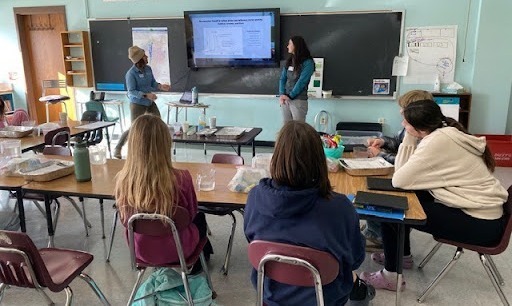
Written by the GEMS Middle School Cultivating Pathways to Sustainability Youth Leadership Team
Part I
This summer, you may have noticed some changes near the entrance to the Georgia Elementary and Middle School (GEMS). The GEMS shrubs and the large maple tree are, unfortunately, no longer part of our school grounds. In their place is now a big hole. What’s the deal with the big hole in front of our school? It’s actually not just a hole; it’s a gravel wetland. We certainly miss our GEMS shrubs, but we now have something equally important in their place, a gravel wetland to collect stormwater runoff. Read on to learn more about stormwater runoff, gravel waterlands, and how they relate to one another.
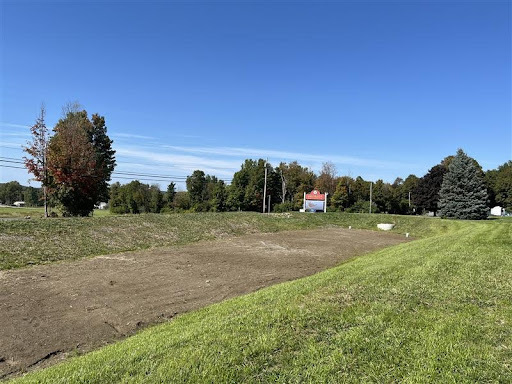
Photo: GEMS Gravel Wetland (Summer 2025)
What is stormwater runoff?
When rain and snowmelt happen on parking lots and buildings, it can’t soak into the ground. Instead, it flows over those surfaces and collects pollutants and dirt as it heads toward streams and Lake Champlain. This is called stormwater runoff, and it can be very unhealthy for our waters.
GEMS has a big parking lot and a large school building, which means it generates a lot of stormwater runoff. That runoff goes into Mill River, which flows directly into Lake Champlain. Lots of schools in Vermont have this problem, so the state created a program called “Green Schools” to help schools make changes to their grounds to produce less stormwater runoff. Stay tuned for more information about the Vermont Green Schools in future blog posts.
What is the gravel wetland?
That’s where the hole comes in—it is actually a gravel wetland. Gravel wetlands treat stormwater runoff by slowing it down, letting it flow into the ground, and filtering pollutants and dirt out of the runoff. The filtered water will eventually continue its journey to Lake Champlain. The gravel wetland is a big hole filled with gravel and underground pipes that direct water into a culvert by the road.
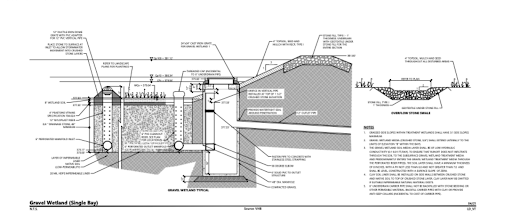
Photo: Engineering design plans for the GEMS Gravel Wetland
On top of the gravel is soil, and on top of the soil we will eventually have flowers and other plants like what you would see in a real wetland. The roots of these plants help filter stormwater runoff and keep the soil intact, and the plants themselves are food and habitat for native animals like insects and birds. Unfortunately, due to the incredibly dry conditions this summer, the native plantings did not thrive in our gravel wetland. Students will be planting flowers and other plants this spring.
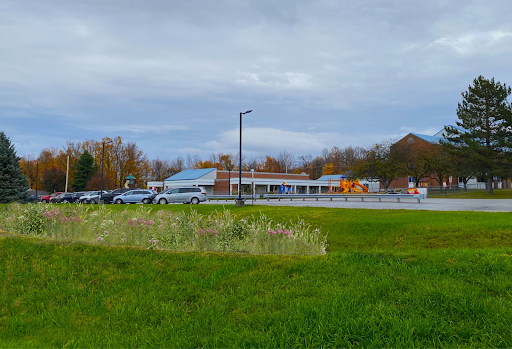
Photo: Digital Rendering of the (future) GEMS Gravel Wetland
GEMS students are working with the Lake Champlain Committee to highlight and add to the gravel wetland this year! We will be adding plants to the gravel wetland and on the grass around it. We’ll also add in signs that explain what stormwater is and how the gravel wetland works. More information about this project, which is supported by the Lake Champlain Basin Program, will be coming in Part II of our GEMS Stormwater Education & Reduction Project blog post series.
Thank you to our community partners on this project: Green Schools Initiative, Lake Champlain Committee, Lake Champlain Sea Grant, and Maddocks Landscaping.
We would also like to extend our appreciation to Ashley from the Lake Champlain Sea Grant and Eileen from the Lake Champlain Committee for teaching our GEMS team about stormwater runoff and ways we can reduce runoff.
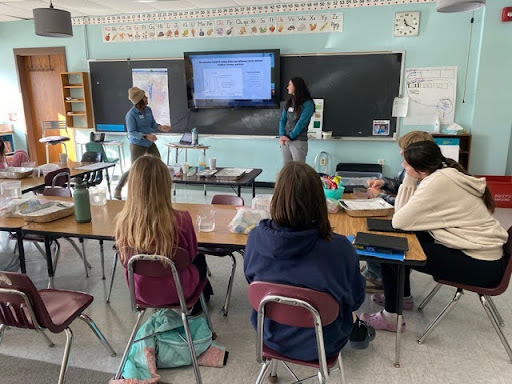
Photo: GEMS students participating in a lesson from the Soaking Up Stormwater curriculum.

Karen Lehning, Ed.D.
GEMS Director of Teaching & Learning
@klehning02
#WeAreGEMS